
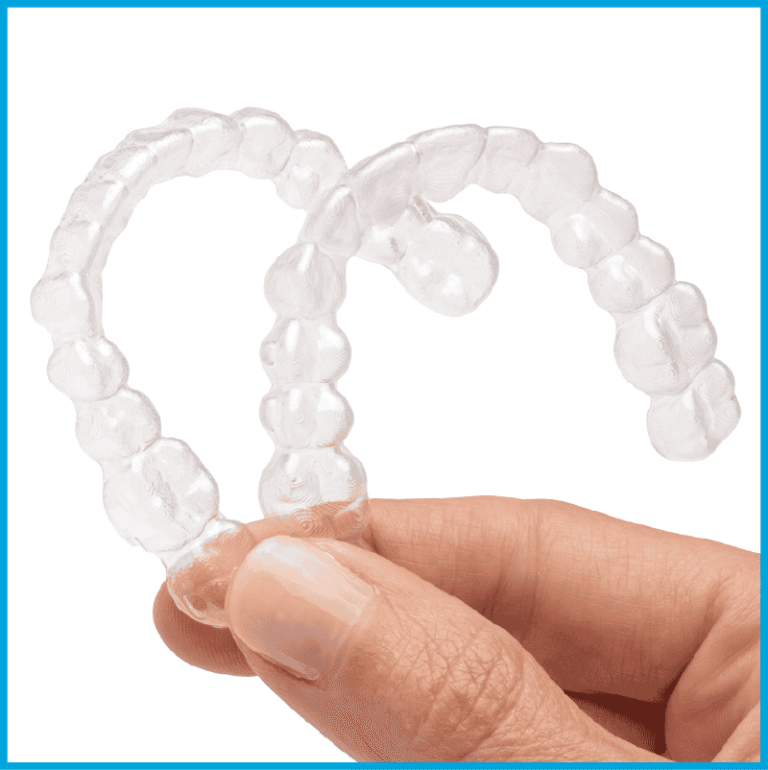
One of the questions that comes up far too late in the orthodontic journey (and sometimes, unfortunately, after it is too late) is about the retainer after clear aligner treatment: what happens once the treatment plan ends? WebMD confirms that the post-treatment stage is just as important as the treatment stage itself, and that neglecting it is the most common reason teeth return to their previous position after years of effort and commitment.

Why Do Teeth Move Back Without a Retainer?
Teeth are not completely fixed even after the treatment plan ends. The tissues and ligaments around the roots need a long time (possibly months or more) to fully settle into the new position. Without a retainer, teeth gradually tend to move back toward their original positions, a natural phenomenon known medically as "relapse". This is exactly why a retainer after clear aligner treatment is a step that cannot be skipped.
How Does a Retainer Work?
A retainer holds the teeth in their new position while the surrounding tissues settle over time, just as a broken bone needs a splint for a while after the main cast is removed. Without this transition period, teeth can quickly return to their old position. Some clear aligner systems, such as the Angel Aligner Retainer line, are designed specifically for this stage to match the same technology as the previous clear aligner sets.
Do you want to know if Angel Aligner clear aligners are right for your case?
How Long Should You Wear a Retainer?
Your treating doctor sets the exact schedule according to your case, but the common pattern is near-constant wear in the first months after treatment ends, then gradually moving to night-time wear only for a longer period, and sometimes continuing this indefinitely to maintain the long-term result. What matters most is never deciding to reduce your wear time on your own without consulting your doctor first.
What If You Stop Wearing Your Retainer?
Stopping early or wearing it irregularly is the most common reason some mild crowding returns years after successful treatment, which may require partial re-treatment later, with extra costs and time that were never planned for. Following the retainer schedule your doctor sets after clear aligner treatment is much cheaper and easier than repeating a full treatment plan, and it saves you a great deal of time and effort in the future.
Types of Retainers After Clear Aligner Treatment
There are two main types of retainers after clear aligner treatment: the fixed (bonded) retainer, a thin wire bonded behind the front teeth that no one can see, and the removable retainer, which looks like the clear aligners themselves and can be taken out and put back in. Your treating doctor chooses the most suitable type for your case based on how much your teeth have moved and your habits, and sometimes both types are used together to ensure the best possible long-term result. With the Angel Aligner Retainer line specifically, the removable retainer is precisely designed to feel familiar, close to your previous treatment sets, making it easy for the patient to adapt to it from day one without any real difficulty.
Retainers After Clear Aligner Treatment and the Cost of Re-treatment
Ignoring the retainer after clear aligner treatment does not just lead to some mild crowding returning; it may also mean needing a completely new treatment plan, costing as much time and effort as the first treatment. This is what makes committing to wearing your retainer as your doctor instructs the most sensible decision, both financially and for your health, to protect your entire treatment result.

Frequently Asked Questions
Another important question: can the same retainer be used for many years after clear aligner treatment? Usually yes, provided it is well cared for, cleaned regularly and checked periodically with your doctor to make sure it is not damaged and still fits your teeth over time. Some patients need to replace it after several years due to normal wear, which is simple and nothing to worry about if it is detected in time during a routine check-up.
Is a retainer painful like treatment aligners? No. It does not move the teeth, it only holds them in place, so it does not come with the same feeling of pressure. Does it need replacing over time? Yes, it is best to have it checked regularly by your doctor to make sure it continues to fit your teeth precisely.
The retainer stage is not an extra detail; it is key to maintaining your long-term treatment result. To discuss a complete follow-up plan and the right retainer for your case after treatment, you can CONSULTATION REQUEST a specialist doctor, or view Your smile at MDS, the exclusive agent for Angel Aligner in Saudi Arabia.